The Ripple Effect of Late Trucks in Produce
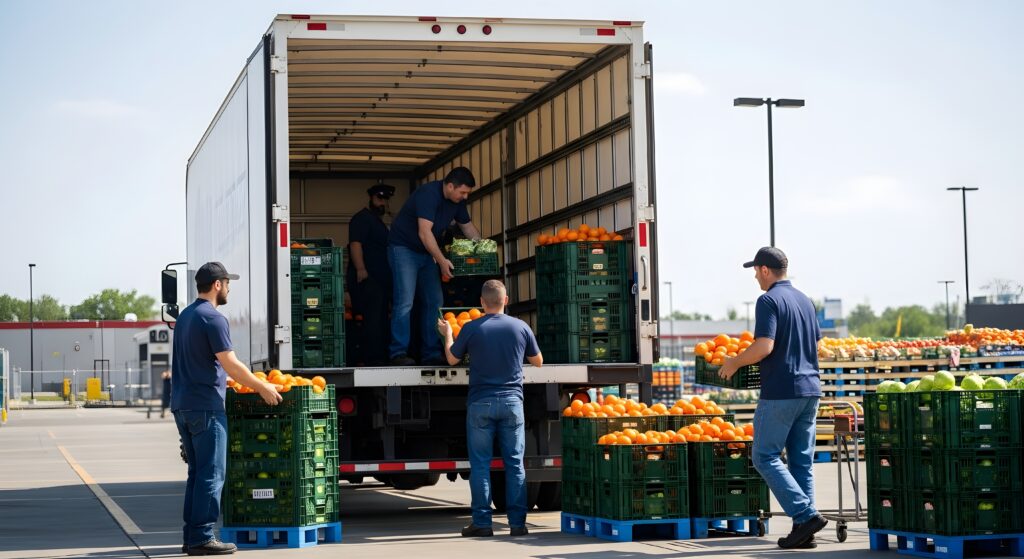
A truck pulling in late does more than miss an appointment. In a produce operation, it can leave a full crew standing on the clock, compress the rest of the shift, disrupt production schedules, and put a time-sensitive delivery at risk. One transportation delay can quickly become a labor problem…an expensive one.
That connection is becoming harder for produce businesses to ignore, and industry leaders point to two pressures that are closely connected: labor availability and the rising cost of moving products efficiently from fields and farms to retailers.
Produce facilities operate within tight windows. Harvest schedules, packing lines, dock appointments, retailer requirements, and product shelf life all depend on precise timing. When the truck is not where it needs to be, the impact reaches well beyond transportation.
Employees may be paid to wait for an inbound or outbound truck. Managers may have to cut a shift short, extend hours later than planned, or ask employees to adjust start times with little notice. Over time, that fluctuation makes an already-difficult labor environment even harder to manage. It affects overtime, productivity, employee satisfaction, and the facility’s ability to plan confidently.
For plant managers, this is not a theoretical supply chain issue. It is a daily operational challenge: How many people are needed? When should they report? Will product and equipment be ready when the truck arrives? A lack of reliable transportation information makes every one of those decisions harder.
No transportation network is completely free of delays. Weather, traffic, capacity constraints, and unexpected disruptions are part of moving fresh freight. The difference is how quickly the shipper knows there is a problem—and how much time the operation has to respond.
Real-time tracking, proactive communication, and accurate ETAs give plant teams the information they need to adjust before a delay reaches the dock. Managers can shift labor to another task, change the production sequence, update receiving teams, or communicate with customers earlier. Even when a truck is late, better visibility can reduce operational damage.
Stronger collaboration between growers and retailers is key to building a more adaptable supply chain. Transportation must be part of that collaboration. Growers, shippers, carriers, warehouses, and retailers need shared information and clear communication to protect tight delivery windows from farm to store.
For produce companies, controlling transportation costs remains important, but the lowest linehaul rate does not always create the lowest total cost. If unreliable service leads to idle labor, overtime, missed appointments, rejected product, or reduced shelf life, the savings disappear quickly.
The strongest transportation strategies account for the entire operation. Reliable capacity, better visibility, responsive support, and consistent communication help produce teams protect both their freight and their workforce. Because in fresh freight, the whole operation is waiting on it.
Dynamic Logistix is a third-party provider of produce shipping and freight solutions that combines a world-class technology platform with stellar personal service. By providing superior visibility, transparent processes, and comprehensive real-time reporting through our transportation management software, clients save time and money. For more information, please visit our website and check out our LinkedIn page to join our growing team.
A brief, 15-minute meeting with a DLX shipping solutions team member, scheduled based on your availability.