

February 2026

Market Update

Transportation Trends

General Outlook

  • February 2026 continues to reflect a market looking to shift from historical trends.  
    • Capacity constraints along with harsh weather conditions continue to have an impact on the freight market. 
  • Tariffs continue to create uncertainty in the market causing an impact to freight flows.
  • Retail spending has flattened as the industry has moved past the Holiday push.
  • Labor market: 
    • Unemployment rate currently stands at 4.43% in February 2026.

LTL

  • Current Market
    • The LTL market in February 2026 remains stable but growing tighter in some key markets.
      • Volume remains soft based on a slower replenishment in the retail industry.
    • Larger LTL carriers are looking to excess additional terminal capacity to capture more volume based on the soft market.  
    • LTL pricing remains firm and disciplined by the LTL carriers despite the declining volumes.
    • NMFC reclassification updates are changing the LTL pricing is shifting to more of a density-based program.
      • It is very important to get a better understanding of your dimensions to avoid additional cost.
  • Key Takeaways
    • Demand remains soft, with no clear signs of a change in the market.
    • Pricing remains disciplined with the LTL carriers.
    • Capacity is available, but we are starting to see disruptions in more of the regional market. 
    • Review your packaging and dimensions to take advantage of the density-based pricing
    • Continue to build carrier relationships as the market continues to make changes
    • Invest or partner with a company to better utilize automation to help control cost.

Truckload

  • Current Market
    • Capacity and rates continue to remain high.
    • Carrier Rejections continue to tighten for the TL market.
      • Tender Rejection by Mode:
        • Van – Current Rejection rate is 13%
        • Reefer – Current Rejection rate is 20%
        • Flatbed – Current Rejection rate 24%
    • Freight volume remains down as we kick off 2026.
      • Capacity remains tight, increasing the spot rates in the market.
      • Contracted pricing begins to shift as the carriers start chasing the higher spot rates.
  • Key Takeaways
    • Overall demand is soft as contracted volumes trend below the past 2 years.
    • Spot rates continue to rise as capacity and weather cause disruptions.
    • Technology will be key to driving compliance with core carriers.
    • Start your planning now! Find a partner that can provide you with technology, visibility, and sustainability in a volatile market.

SONAR

Dashboard showing Truckload -0.2%, Intermodal +2.53%, Ocean -0.53% week-over-week
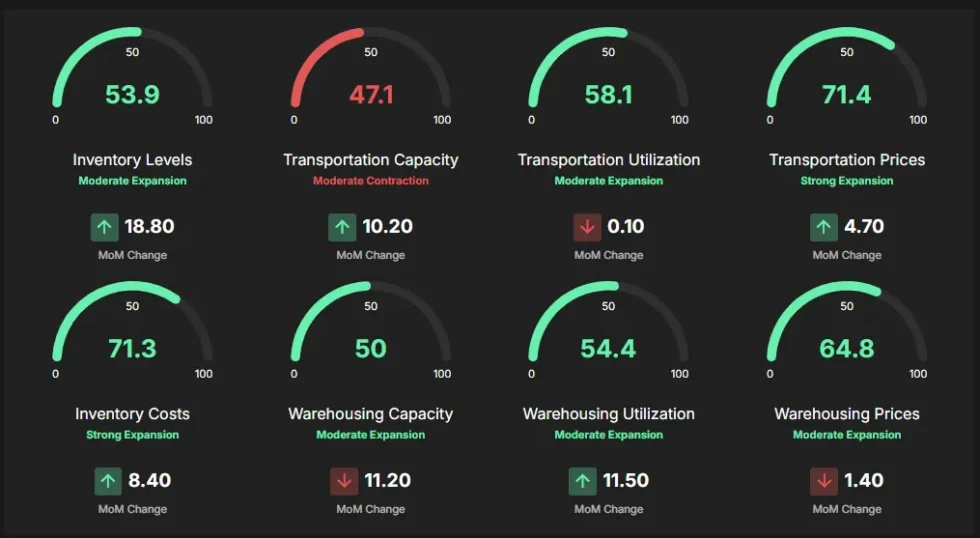
Supply chain dashboard with gauges for inventory, transport, and warehousing metrics

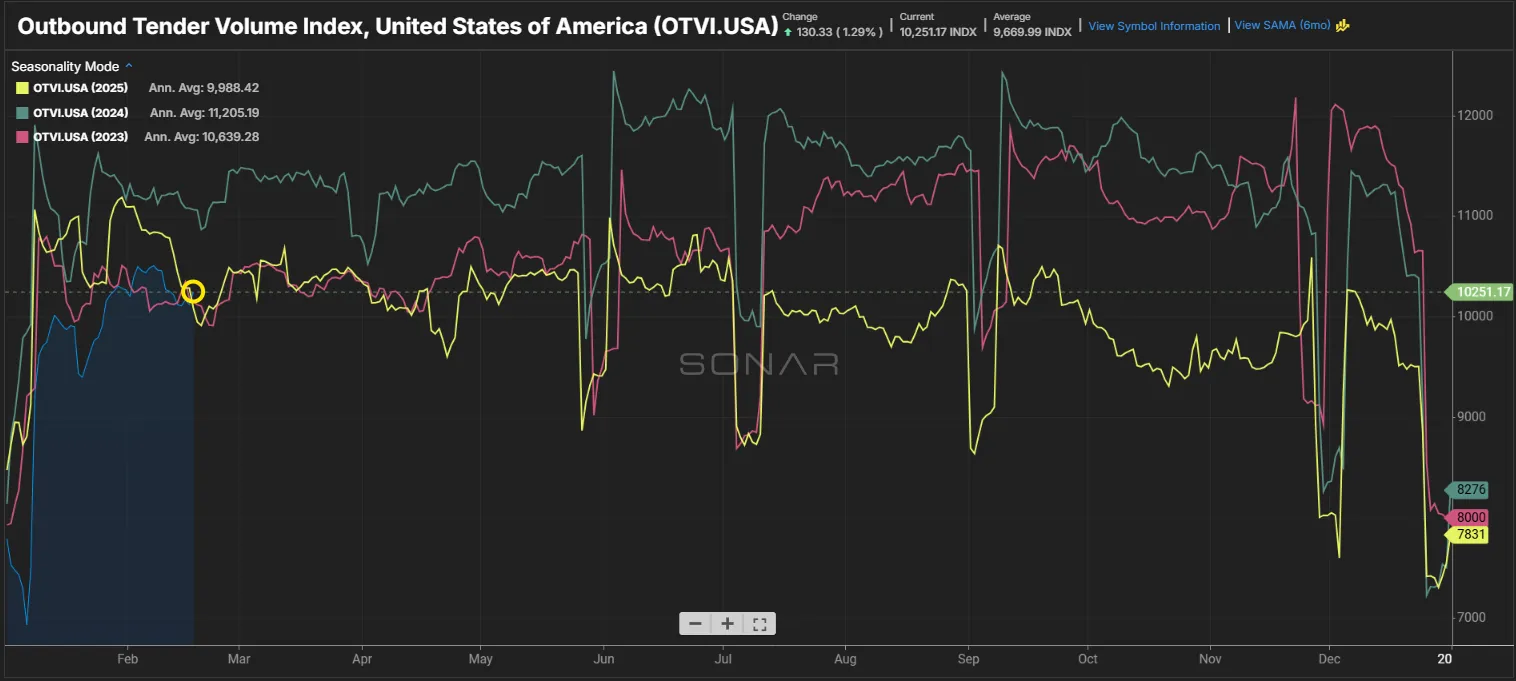
Outbound Tender Volume - All Modes

  • Outbound tender volumes starts to come back after the dip in late January. Volume exceeds 2025 slightly for the first time this year.
Line chart of US Outbound Tender Volume Index comparing 2023–2025 trends

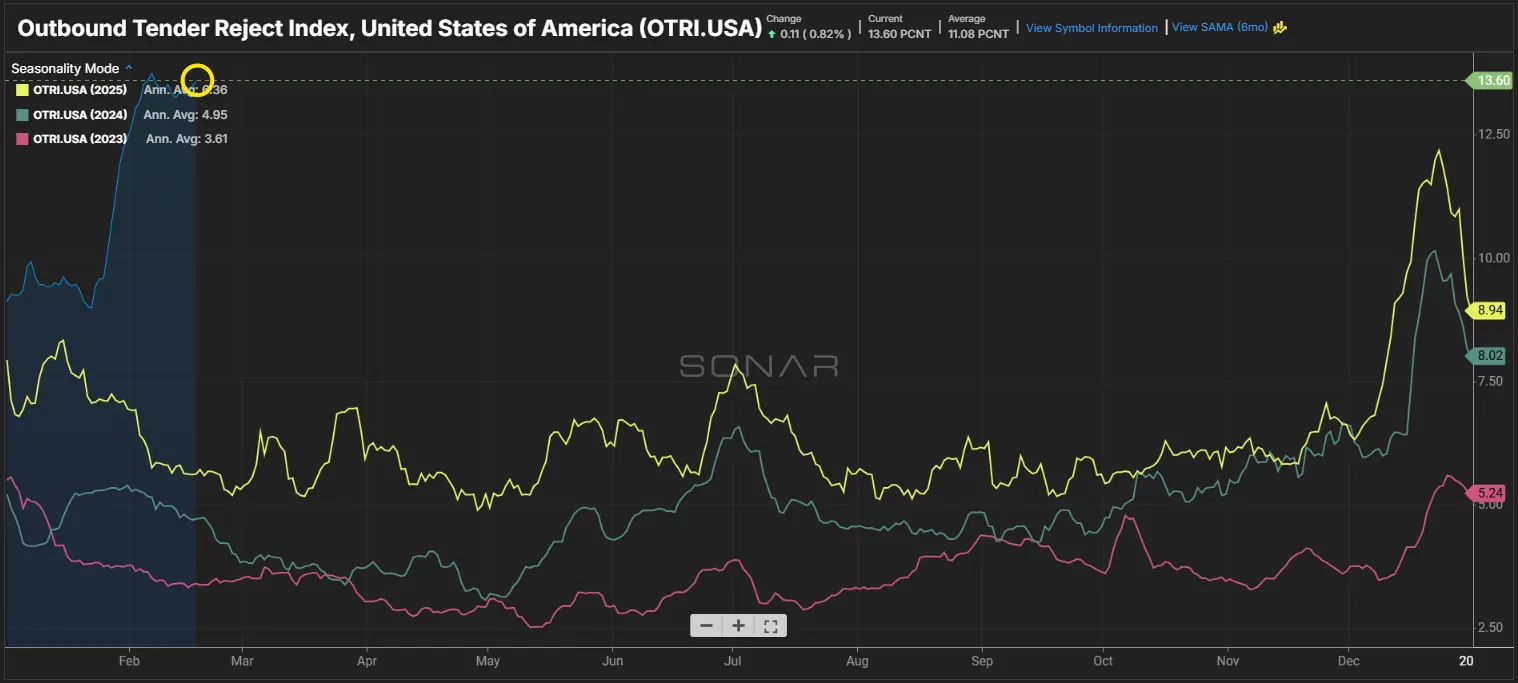
Outbound Tender Reject - All Modes

  • Overall Rejections remain high as we head into 2026.  
    • Capacity remains the number one reason for the rejections across all modes.
Line chart of US Outbound Tender Reject Index comparing 2023–2025 levels

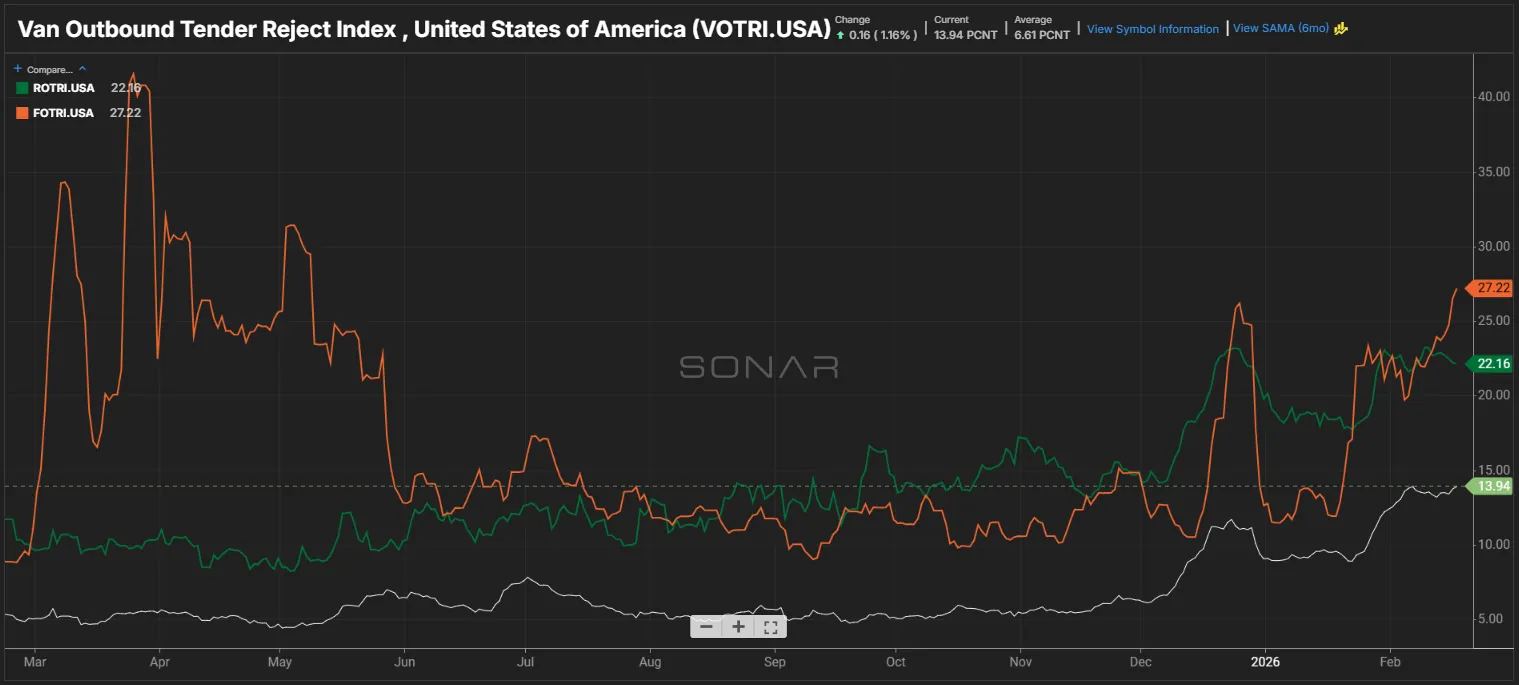
Outbound Tender Reject – by Mode

  • Orange Line – Flatbed: Rejections up vs. this same time last year. 
  • Green line – Reefer: Rejections for Reefer remain up and have been impacting spot rates across the county.
  • White line – Van: Van Rejections flatten out vs. last month but remain up vs. this same time last year. 
Line chart of US Van Outbound Tender Reject Index with ROTRI and FOTRI comparison

Carrier Authorities

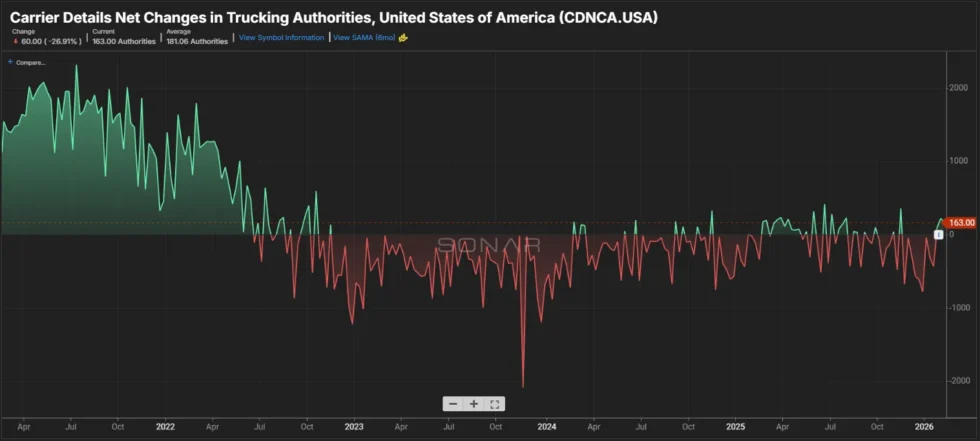
  • This graph indicates we have less transportation companies coming into the market based on the current demand.
    • Authorities increased this month vs. last month.  Demand in the market is allowing carriers to come back into the TL space. 
Chart of US net changes in trucking authorities showing gains and losses over time

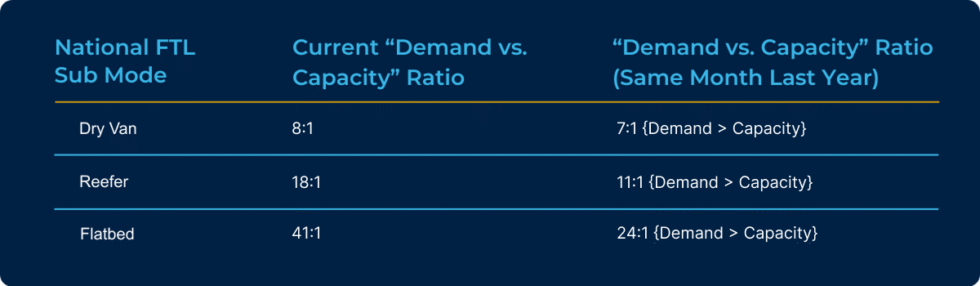
Demand vs. Capacity Metrics - January 2026

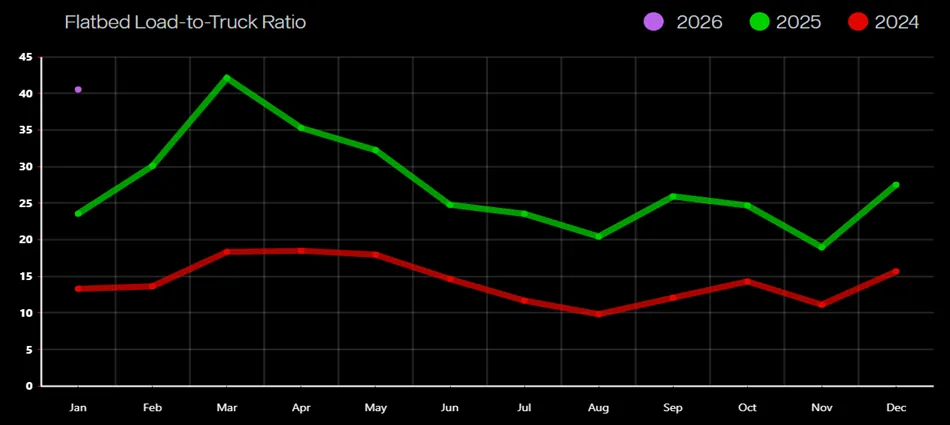
Table of FTL demand vs capacity ratios: Dry Van 8:1, Reefer 18:1, Flatbed 41:1

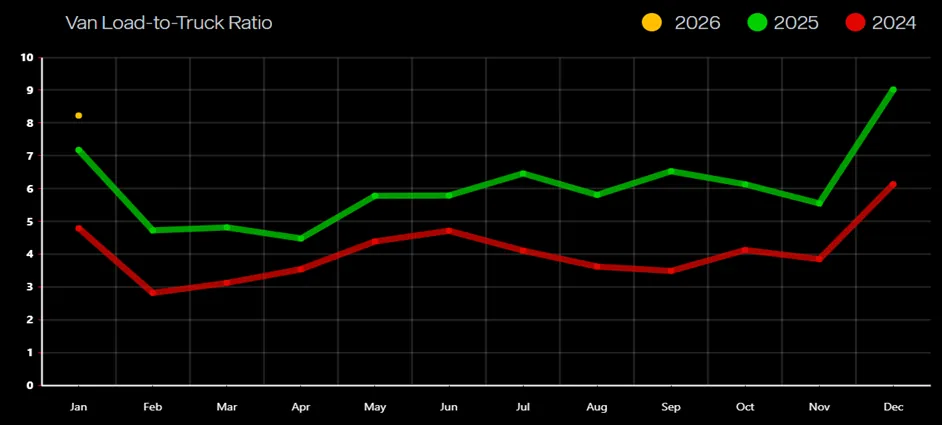
Van Load-to-Truck Ratio

Line chart of Van Load-to-Truck Ratio by month comparing 2024–2026

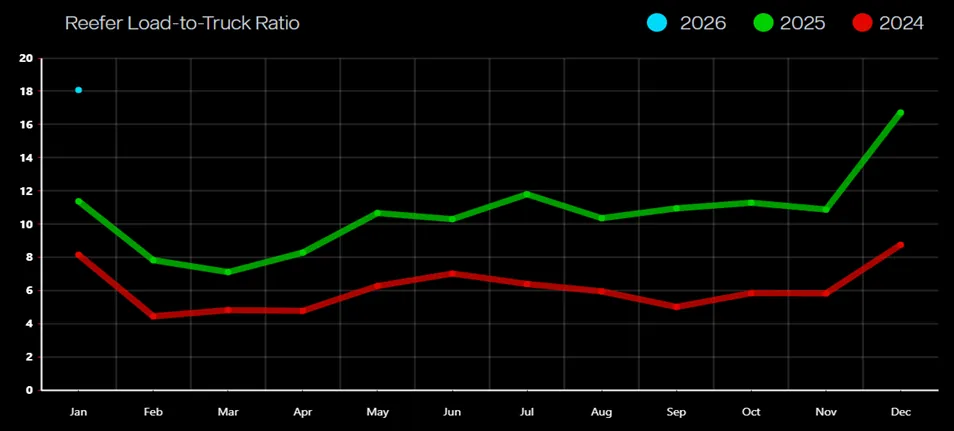
Reefer Load-to-Truck Ratio

Line chart of Reefer Load-to-Truck Ratio by month comparing 2024–2026

Flatbed Load-to-Truck Ratio

Line chart of Flatbed Load-to-Truck Ratio by month comparing 2024–2026

International

  • Current Market
    • Ocean spot rates fell sharply in February.
      • Carriers are prioritizing network utilization over price increases currently.
    • Despite soft volumes, overcapacity still remains a long-term problem. 
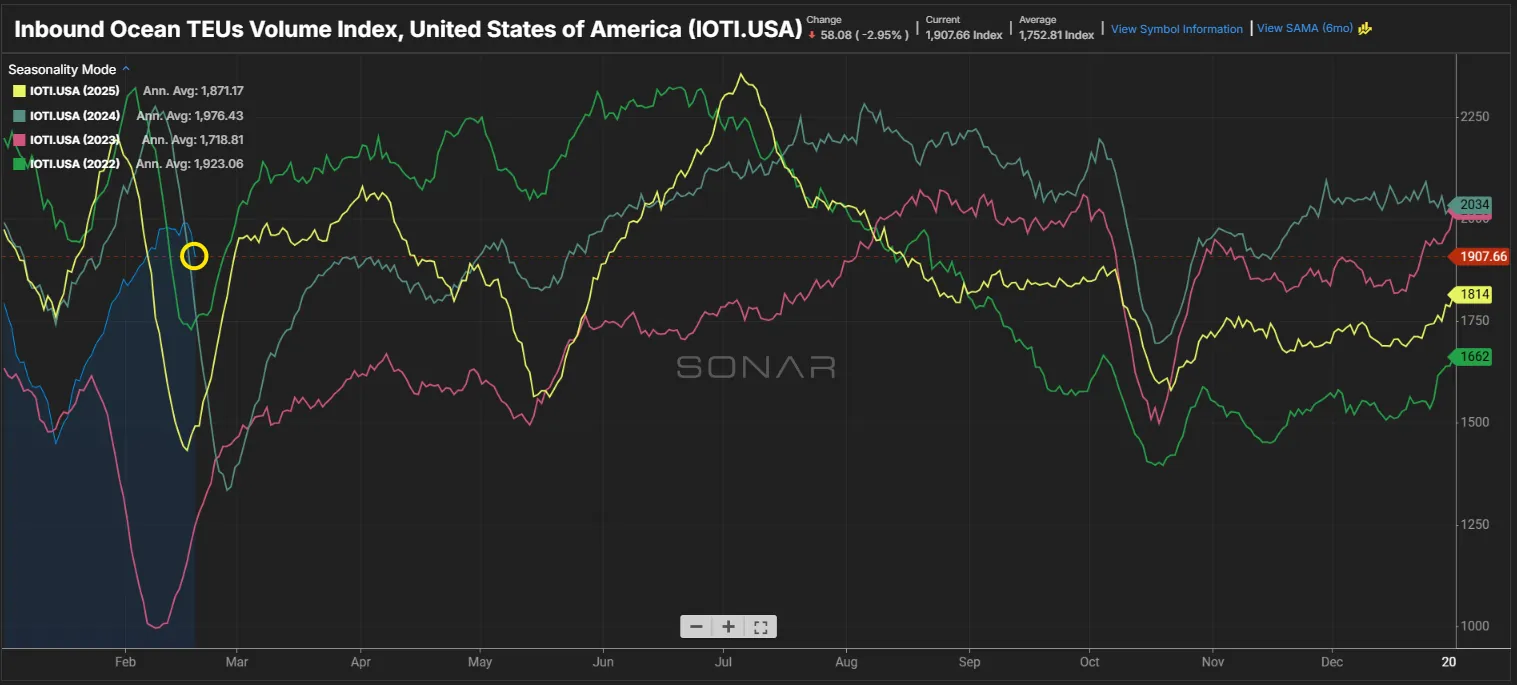
    • Inbound TEUs up vs. this same time last year.
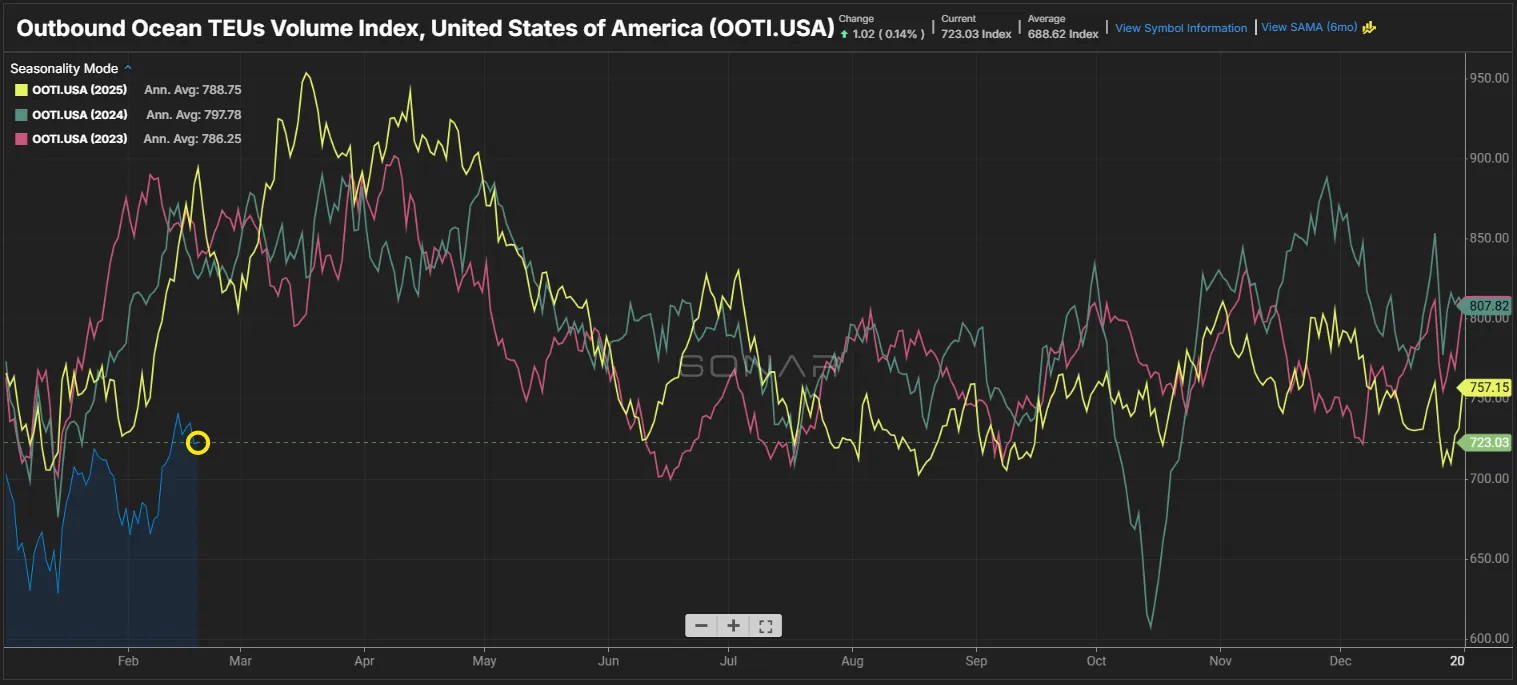
    • Outbound TEUs down vs. this same time last year.
      • Overall, both inbound and outbound TEUs are down 14%
  • Key Takeaways
    • TEU demand remains weak, with no rebound signals
    • Capacity continues to pull back.
    • Rates are down 40% YoY
      • Consider mini bids to help control the volatility of the market.
    • Factors in tariff-driven cost that are having an impact on heavy international lanes

Cross Border

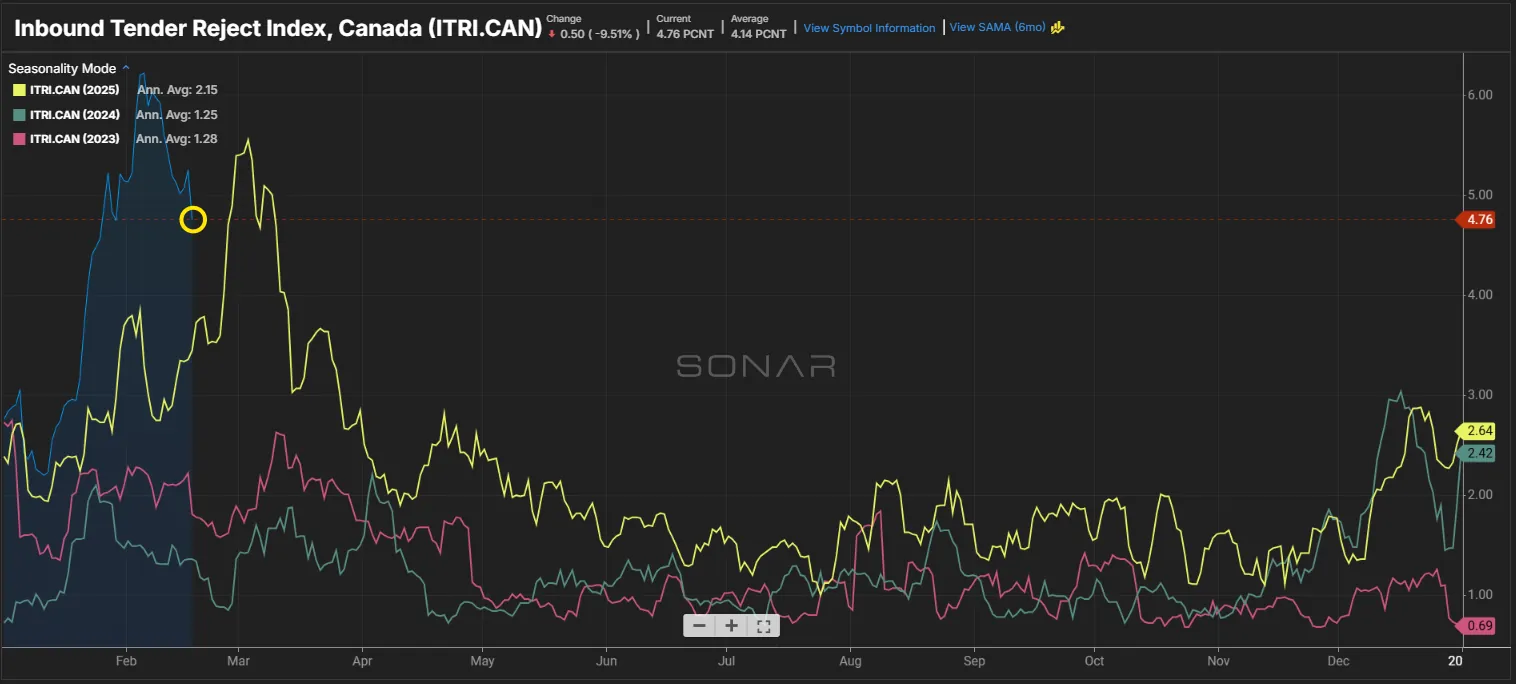
  • Rejection rates remain high, particularly in Laredo and the South Texas Border.  
  • North bound volumes remain steady into the U.S.
  • Capacity on cross-boarder lanes continues to tighten as carriers leave the market.
  • Cargo theft continues to rise on U.S.-Mexico lanes
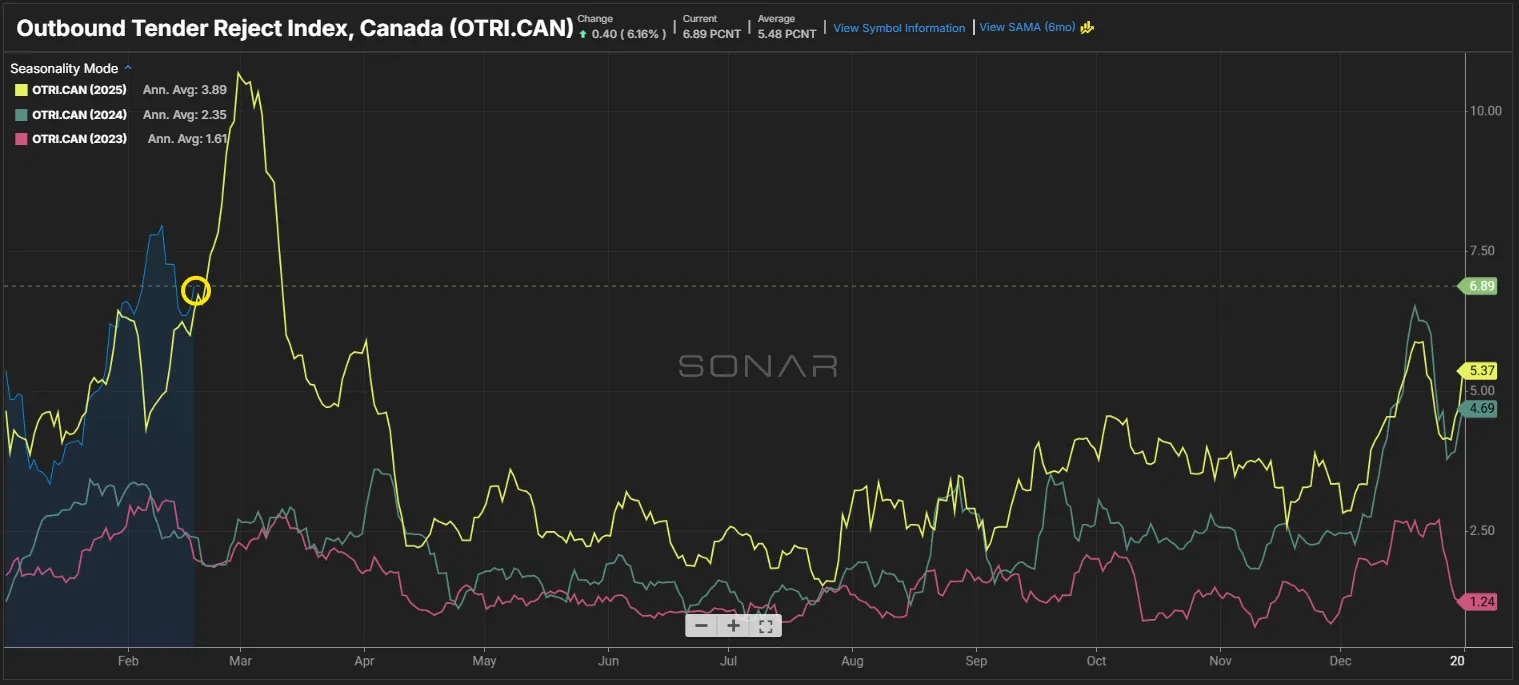
  • Rejection rates in Canada remain high but less extreme than Mexico.
  • Winter weather will continue to have an impact on both capacity and rates.
Line chart of Canada Outbound Tender Reject Index comparing 2023–2025

Fuel Forecast - DOE

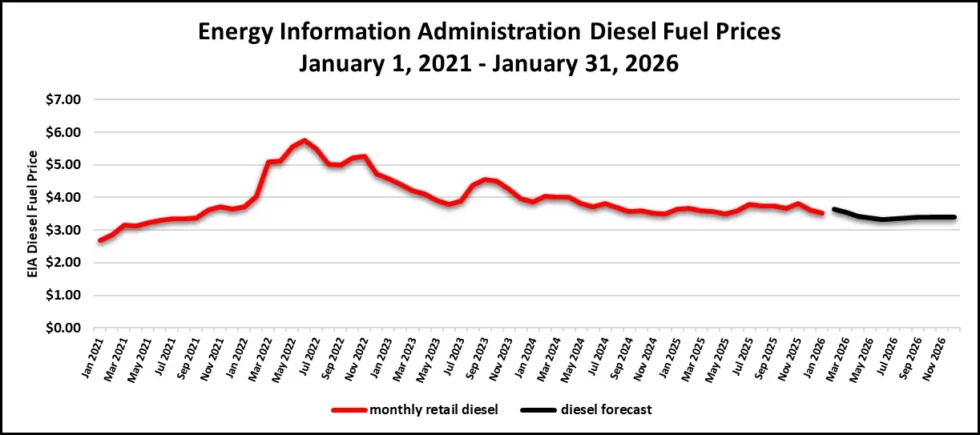
  • 2025 diesel fuel retail prices averaged $3.662/gallon. 
  • Fuel for Q1 2026 is forecasted at $3.566/gallon, Q2 is forecasted at $3.372/gallon, Q3 is forecasted at $3.372/gallon, and Q4 is forecasted at $3.400/gallon.

Energy Information Administration Diesel Fuel Prices January 1, 2021 - December 31, 2025

More
articles

5 Smart Tips for Shipping Produce in 2026

Produce shipping requires precision; you’re transporting perishable products with limited shelf life, tight delivery windows, and little tolerance for temperature fluctuations. As the freight market begins to shift in 2026 with regulatory pressure and capacity adjustments, for produce shippers the details matter.

Read More »

2026 Market Forecast

2026 will mark the transition from a fragile, fraud-heavy freight recession to a tighter, risk-priced market where shippers who modernize their tech and compliance practices

Read More »

Check claim status

To check the status of your claim, or to contact your claim representative, please click the confirmation status link that was sent via email when you filed the claim.

Make an Online Payment 

To make online payments, locate your personalized LockStep payment link sent to you from dlxar@shipdlx.com. If you need help, please contact DLX AR.

Submit an Invoice

Please send your invoice and all backup documents to: