


January 2026
Market Update
Transportation Trends
General Outlook
- Colder weather is here, and snowstorms across the country are causing issues.
- Plan, secure capacity sooner, & add transit days to buffer delays
- Capacity remains relatively high coming off the Holidays.
- July 22nd market gained relief after President Trump withdrew his threat to impose sweeping tariffs.
- Retail spending rose in December 0.6% vs. November.
- Labor market:
- Unemployment fell to 4.40% in December.
- Forecasts predict unemployment to peak near 4.5% in early 2026.
- 30-year fixed mortgage ranges from 5.99%-6.13%
- 15-year fixed mortgage ranges from 5.37%-5.57%
LTL
- Current Market
- Despite a weak demand the LTL industry will still see rate increases in 2026.
- Costs continue to increase for carriers causing an adjustment on rates.
- Record high LTL rates in Q4 of 2025, cost per shipment remains 40% above 2018 levels.
- LTL carriers are focused on network discipline rather than volume.
- A. Duie Pyle expands with an LTL hub near Port of Virginia
- NMFC reclassification updates are changing the LTL pricing is shifting to more of a density-based program.
- It is very important to get a better understanding of your dimensions to avoid additional cost.
- Despite a weak demand the LTL industry will still see rate increases in 2026.
- Key Takeaways
- Demand remains weak, keeping volume soft for LTL carriers.
- Rates will continue to rise.
- LTL market is stable but weak heading into 2026.
- Review your packaging and dimensions to take advantage of the density-based pricing
- Continue to build carrier relationships as the market continues to make changes
- Invest or partner with a company to better utilize automation to help control cost.
Truckload
- Current Market
- Demand is still weak in the TL market but showing early signs of stabilizing.
- Capacity continues to tighten for the TL market.
- Tender Rejection by Mode:
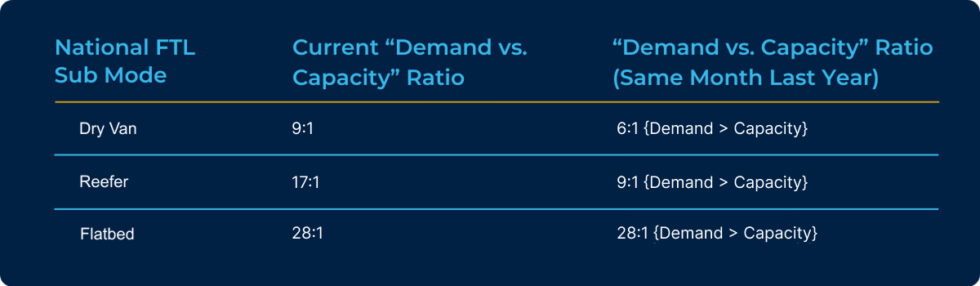
- Van – Current Rejection rate is 9.1%
- Reefer – Current Rejection rate is 15.3%
- Flatbed – Current Rejection rate 18.2%$
- Tender Rejection by Mode:
- Freight volume remains down as we kick off 2026.
- Capacity remains tight, increasing the spot rates in the market.
- Contracted pricing begins to shift as the carriers start chasing the higher spot rates.
- Key Takeaways
- Demand is soft but not collapsing
- Capacity is shrinking quickly
- Spot rates continue to rise.
- Technology will be key to driving compliance with core carriers.
- Start your planning now! Find a partner that can provide you with technology, visibility, and sustainability in a volatile market.
SONAR
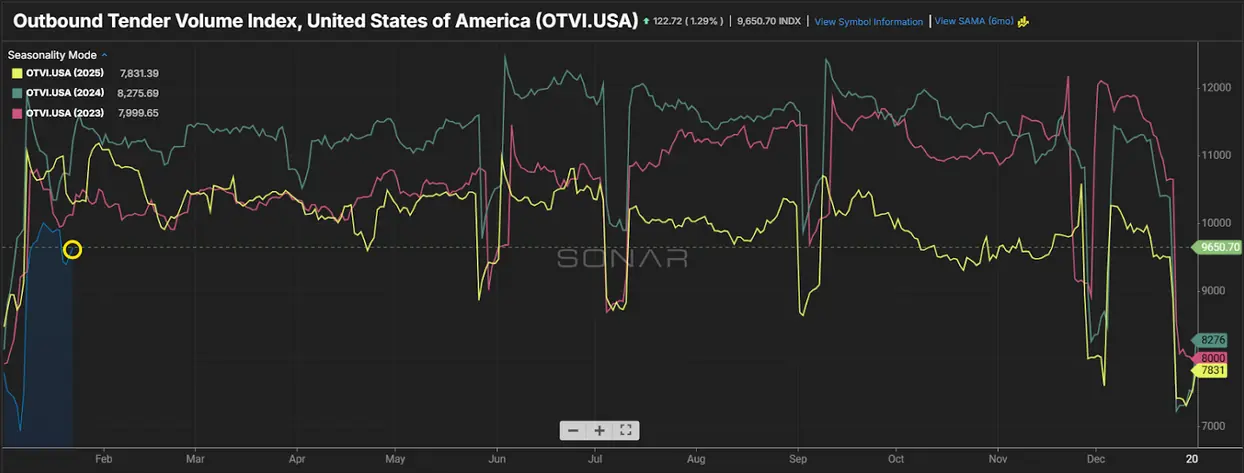
Outbound Tender Volume - All Modes
- Outbound tender volume jumps back up in January, but still down vs. this same time last year.
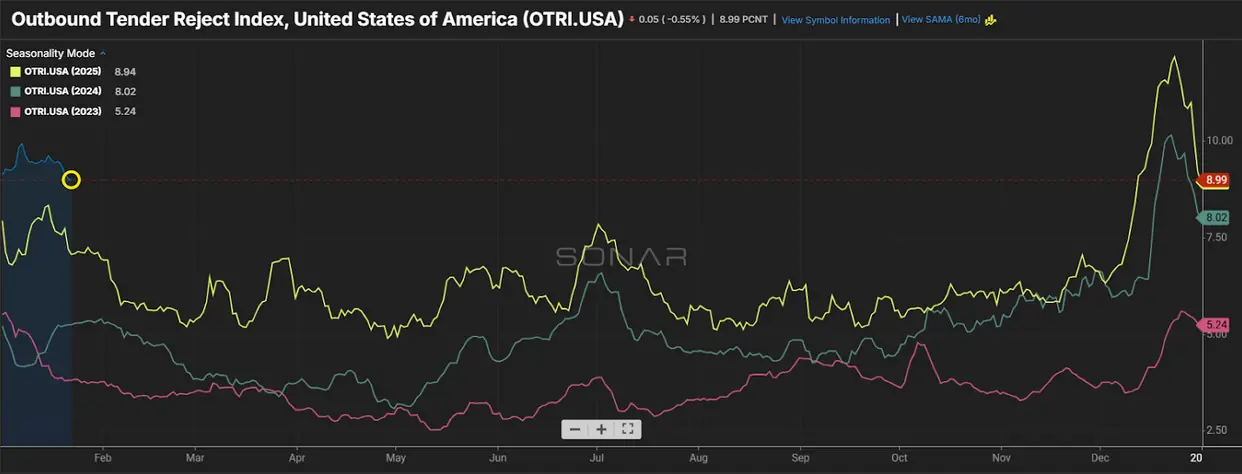
Outbound Tender Reject - All Modes
- Overall Rejections remain high as we head into 2026.
- Capacity remains the number one reason for the rejections across all modes.
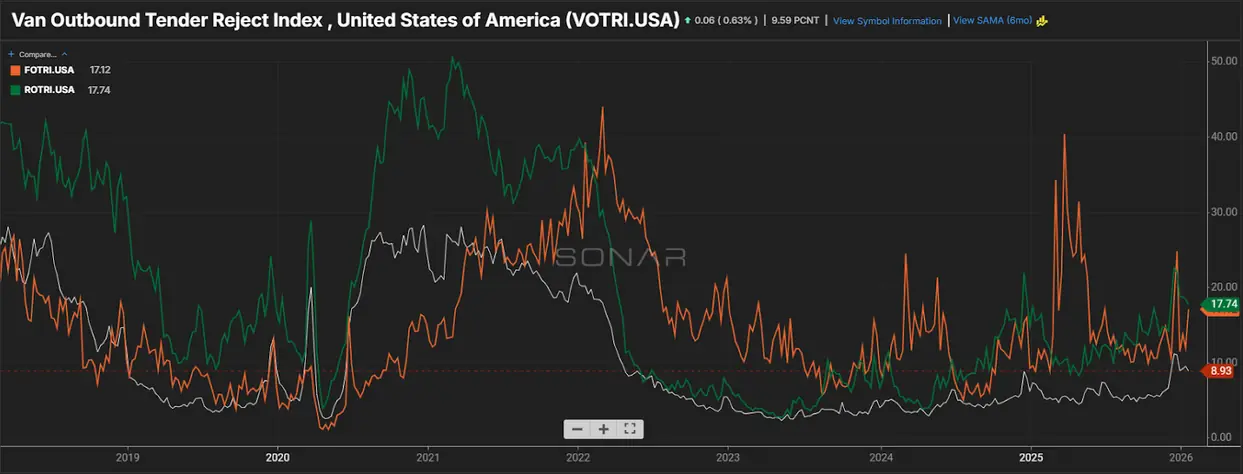
Outbound Tender Reject – by Mode
- Orange Line – Flatbed: Rejections up vs. this same time last year.
- Very important to keep a close eye on the overall outbound volume to ensure you are securing capacity in this market.
- Green line – Reefer: Rejections for Reefer up significantly this month vs. last month.
- Similar to flatbed, increased outbound volume will have a significant impact on capacity in the Reefer space.
- White line – Van: Van Rejections come back down slightly vs. last month but remain up vs. this same time last year.
- Rejections are forecasted to remain higher this year based on the lack of capacity in the market.
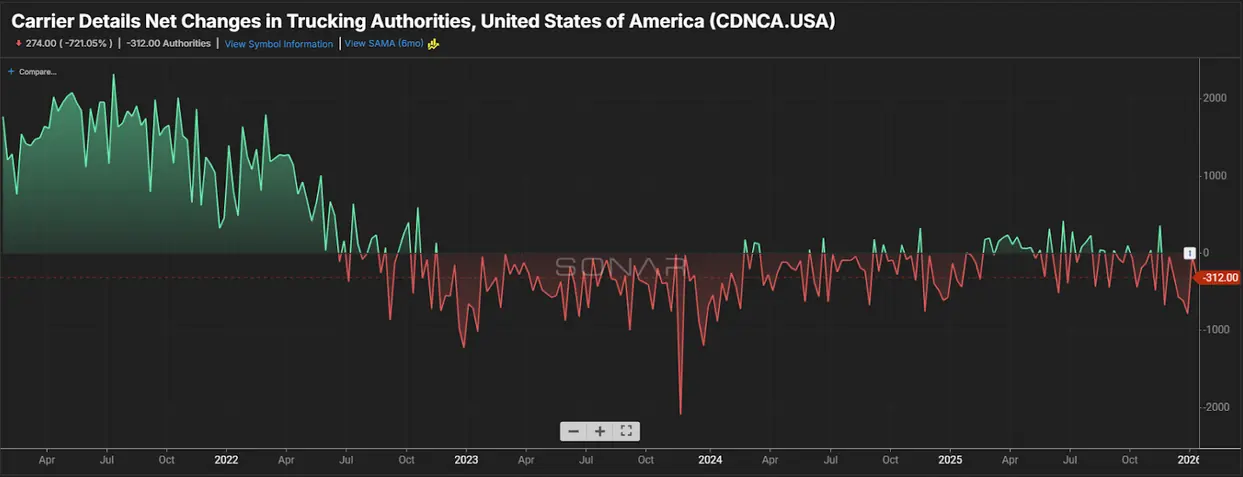
Carrier Authorities
- This graph indicates we have less transportation companies coming into the market based on the current demand.
- Authorities continue to drop which is causing rejections to increase despite the overall volume decrease compared to 2025.
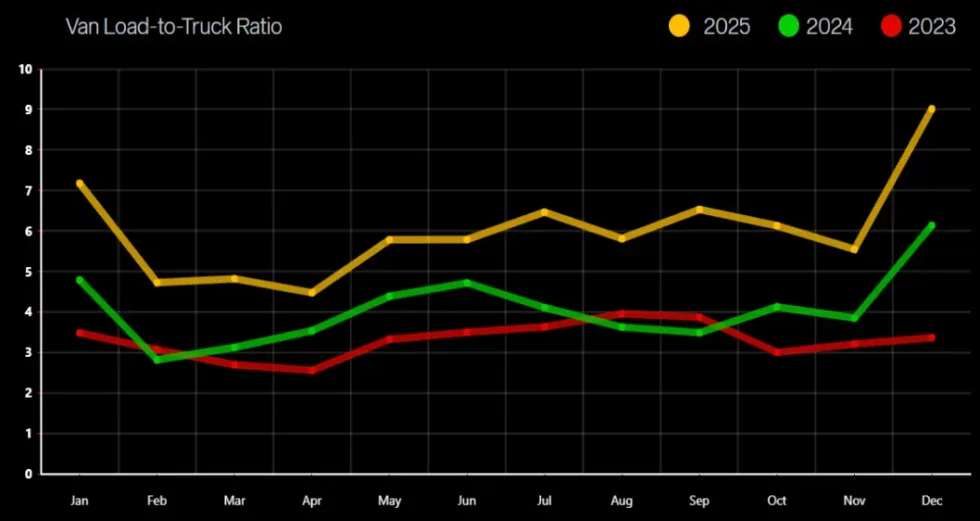
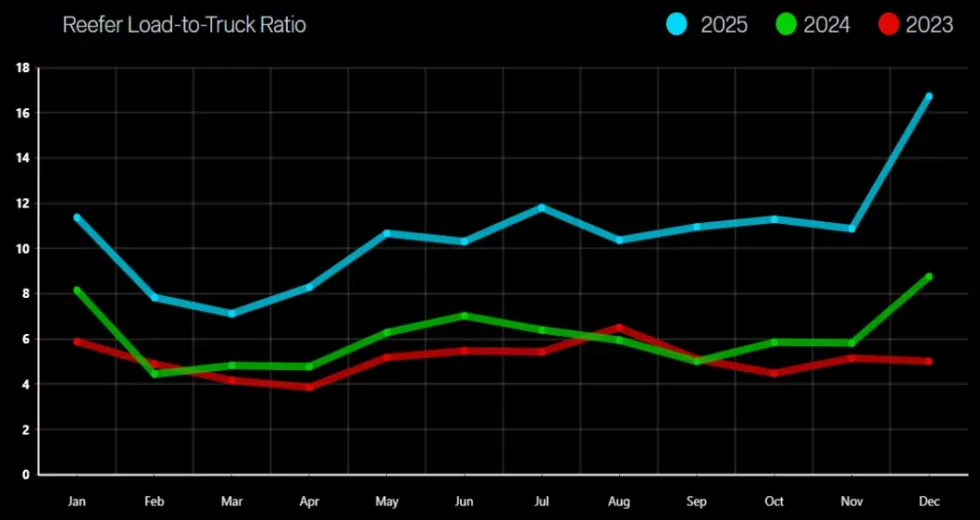
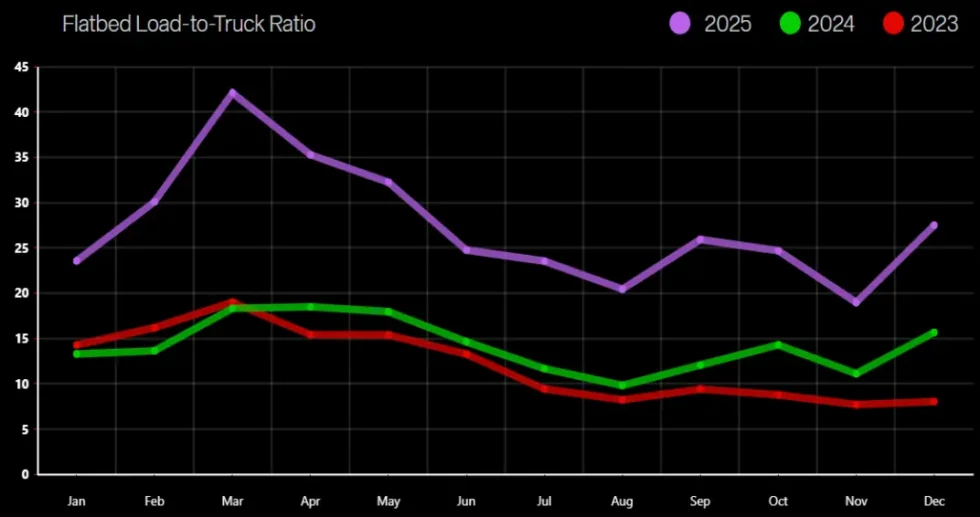
Demand vs. Capacity Metrics - October 2025
Van Load-to-Truck Ratio
Reefer Load-to-Truck Ratio
Flatbed Load-to-Truck Ratio
International
- Current Market
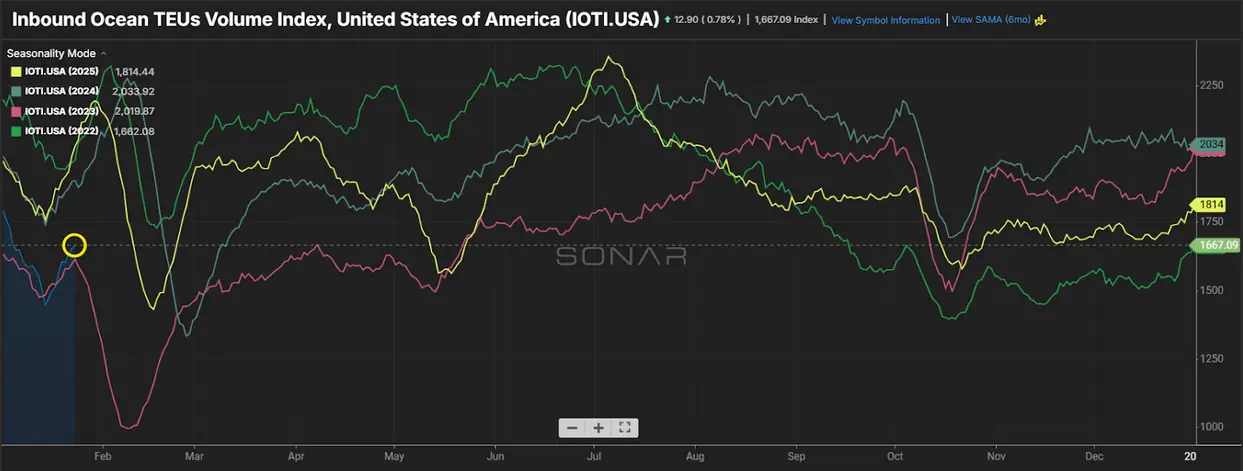
- Ocean rates started high as we came into 2026 but have started to come back down.
- Despite soft volumes, overcapacity still remains a long-term problem.
- U.S. container imports are projected to hit 2.1M TEU’s in January of 2026.
- 2025 total U.S. Container imports were 0.4% lower than 2024.
- Key Takeaways
- Secure space early when moving ocean freight to help control the cost.
- Consider mini bids to help control the volatility of the market.
- Factors in tariff-driven cost that are having an impact on heavy international lanes
- Secure space early when moving ocean freight to help control the cost.
Cross Border
- Mexican exports will remain strong in 2026.
- Capacity on cross-boarder lanes continues to tighten as carriers leave the market.
- Cargo theft continues to rise on U.S.-Mexico lanes.
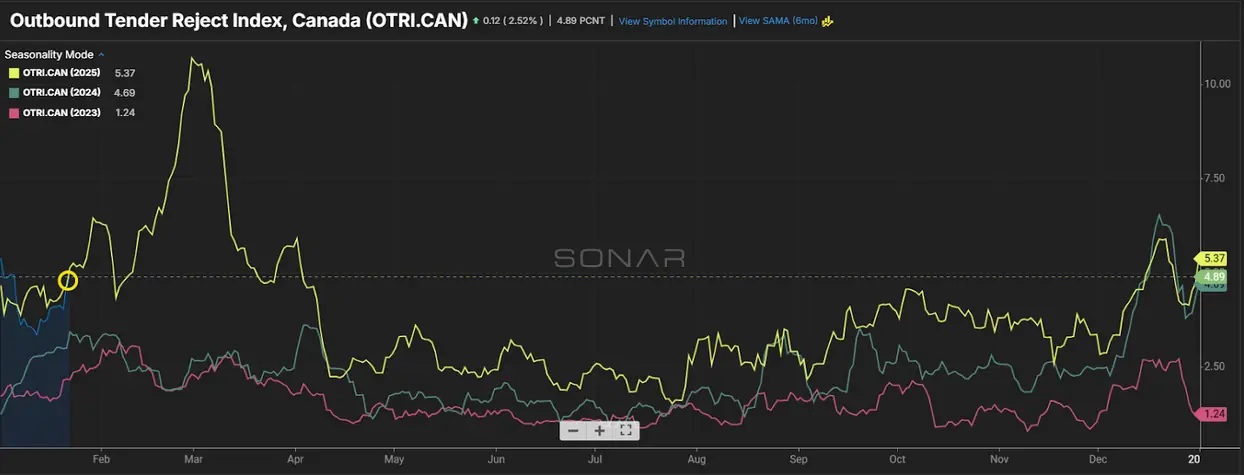
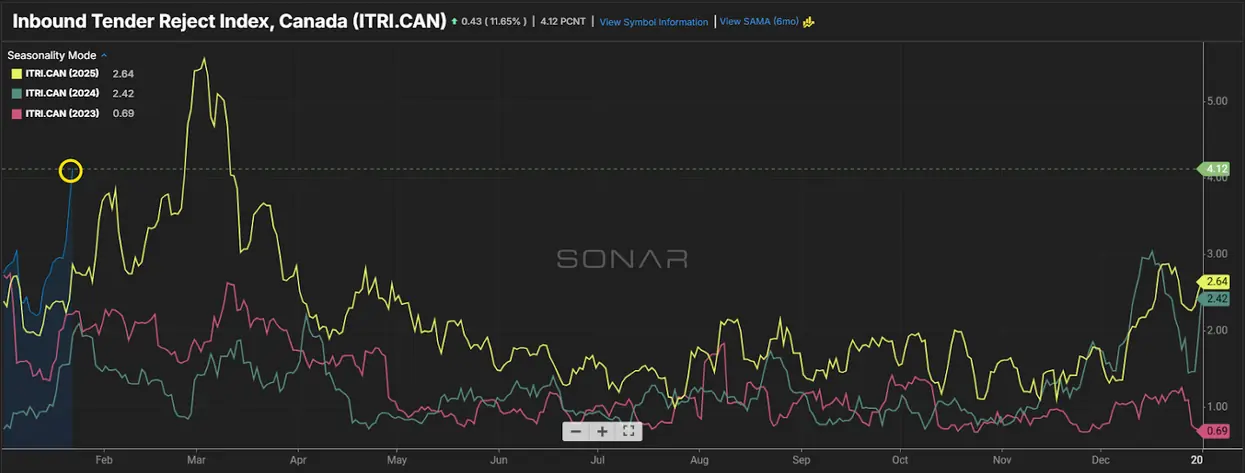
- Canada imposed tariffs could have an impact on export volume into the U.S. in 2026.
- Canadian rates remain stable but can increase as Canadian carrier deal with harsh winter weather.
Fuel Forecast - DOE
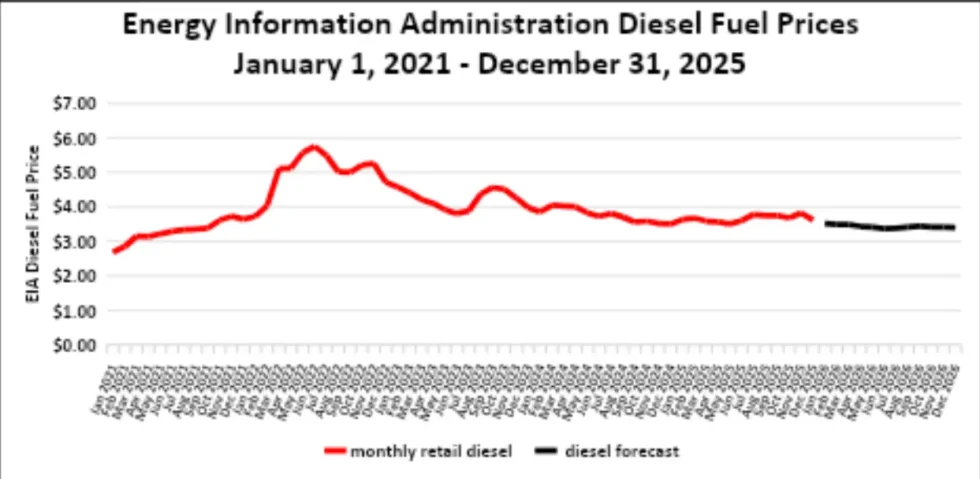
- 2024 diesel fuel retail prices averaged $3.761/gallon through Q4 2024 and Q1 2025 finished lower at an average $3.631/gallon, and Q2 finished at $3.555/gallon.
- Fuel for Q3 finished at $3.757/gallon and Q4 finished at $3.705/gallon to close out 2025.
Energy Information Administration Diesel Fuel Prices January 1, 2021 - December 31, 2025